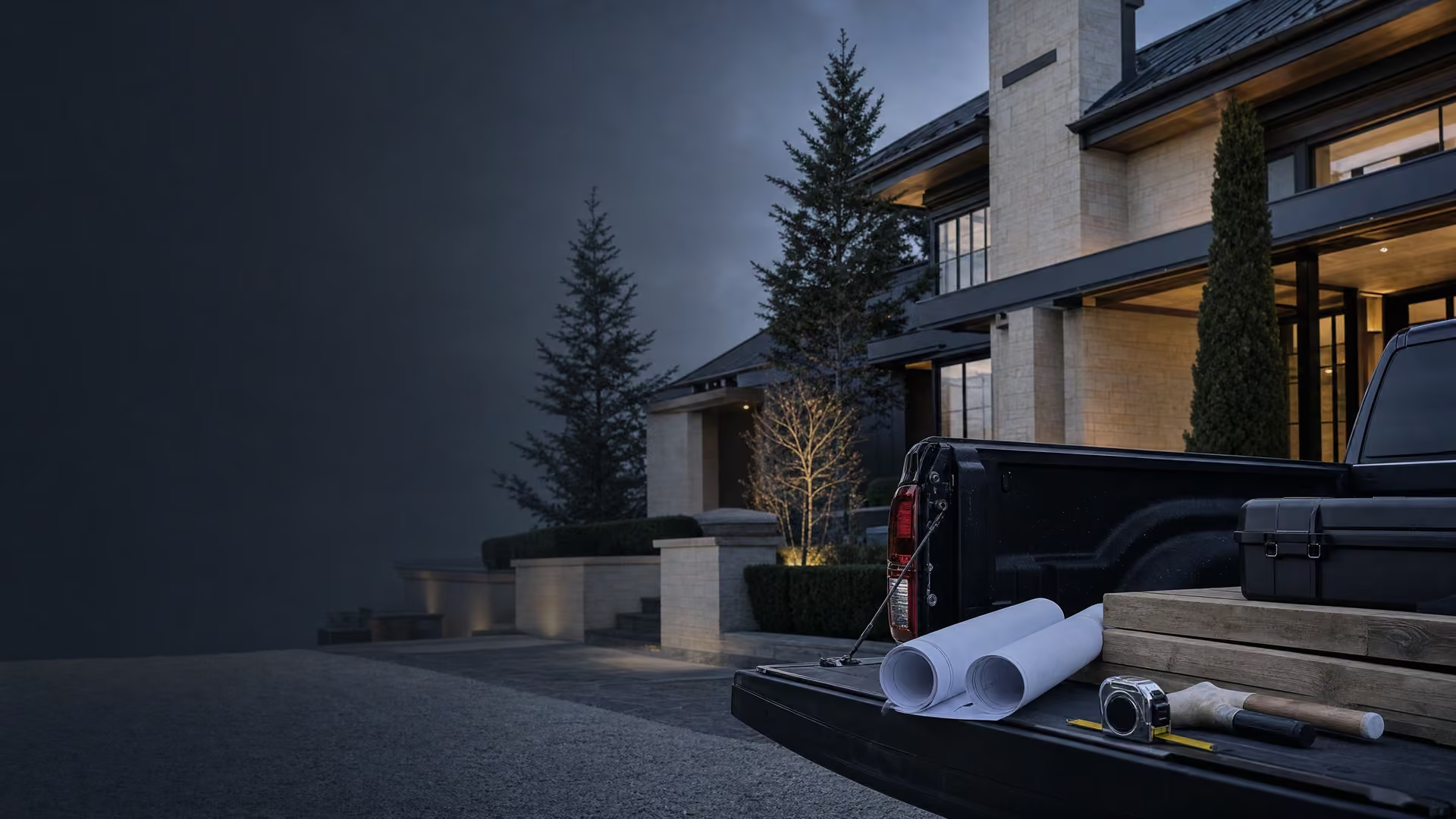
CONTRACTOR WEB DESIGN
Your work is already the proof. Your website should make it obvious.
Premium websites for contractors who win on craft, reputation, and the quality of the finished job. $1,995 fixed. Live in seven days.
$1,995 fixed · seven-day build · yours outright
The short answer
What is contractor web design?
Contractor web design is the design of a website around how homeowners actually choose a contractor: the work, the service area, trust, project fit, and a clear path to an inquiry. A strong contractor site does more than list services. It presents finished projects properly, answers the questions a qualified customer asks before calling, and collects enough context to make the first conversation useful.
The referral does not begin on your homepage. It begins in a text thread.
A homeowner gets your name from someone they trust, then checks the site alone and usually on a phone. They are not looking for a mission statement. They are checking whether the work, location, project type, reviews, and next step all agree with the recommendation.
The website has to transfer trust without flattening the business into a list of services. That means projects carry the visual argument, practical answers reduce uncertainty, and the inquiry collects enough context to protect both sides from a wasted first call.
Signature inspection
What the referral sees at 9:42 p.m.
Six checks happen quickly. The site should answer them in the same order the buyer asks them.
- 01 · Referral
A name arrives
The customer starts with borrowed trust, not a blank search.
- 02 · Phone
The site opens
The first screen has to identify the work and service area without effort.
- 03 · Proof
Projects get inspected
Multiple views and named project types show what the crew can actually deliver.
- 04 · Fit
Location and scope
The customer checks whether the firm works where they live and on this kind of job.
- 05 · Trust
Reviews and ownership
Specific evidence answers who will turn up, communicate, and stand behind the work.
- 06 · Action
A useful first call
Project type, location, budget band, timeline, and photos make the inquiry worth opening.
Eight dimensions
Eight checks between the referral and the call
- 01
Immediate service clarity
Can a visitor identify the trade, project type, and service area in one screen?
- Weak
- A broad slogan with no practical scope.
- Strong
- The work, place, and level of project are explicit.
- Fix
- Replace the generic headline with a concrete service and buyer outcome.
- 02
Project photography
Does the site prove finish quality across more than one job?
- Weak
- A stock hero and a mixed gallery.
- Strong
- Named project groups with sequence, detail, and context.
- Fix
- Curate fewer jobs and show multiple views of each one.
- 03
Service-area confidence
Can the buyer tell whether the contractor works in their location?
- Weak
- A county list buried in the footer.
- Strong
- Natural service-area language attached to relevant work.
- Fix
- State the primary market and operating radius near the proof.
- 04
Review and credential proof
Are trust signals specific and attributable?
- Weak
- Unlabeled praise or decorative badge rows.
- Strong
- Real reviews, licenses, warranties, and associations with context.
- Fix
- Use fewer signals and explain what each one means to the customer.
- 05
Owner-led trust
Does the customer know who is accountable?
- Weak
- A faceless company voice.
- Strong
- A named owner or team with a clear communication role.
- Fix
- Add one direct note about who scopes, communicates, and signs off the work.
- 06
Inquiry qualification
Does the form collect the minimum useful project context?
- Weak
- Name, email, and an empty message box.
- Strong
- Project type, location, budget, timing, and optional photos.
- Fix
- Ask only questions that change the quality of the first call.
- 07
Mobile call path
Can a referral inspect proof and act with one hand?
- Weak
- Tiny galleries and hidden contact controls.
- Strong
- Readable proof, 44-pixel controls, and a clear call path.
- Fix
- Design the phone composition independently and test it at 390 pixels.
- 08
Ownership and speed
Is the site fast, maintainable, and owned by the contractor?
- Weak
- A heavy rental platform with unclear handover.
- Strong
- Fast static output, explicit ownership, and a documented update path.
- Fix
- Confirm domain, code, hosting, and maintenance responsibilities in writing.
Proof you can inspect, labeled for what it is
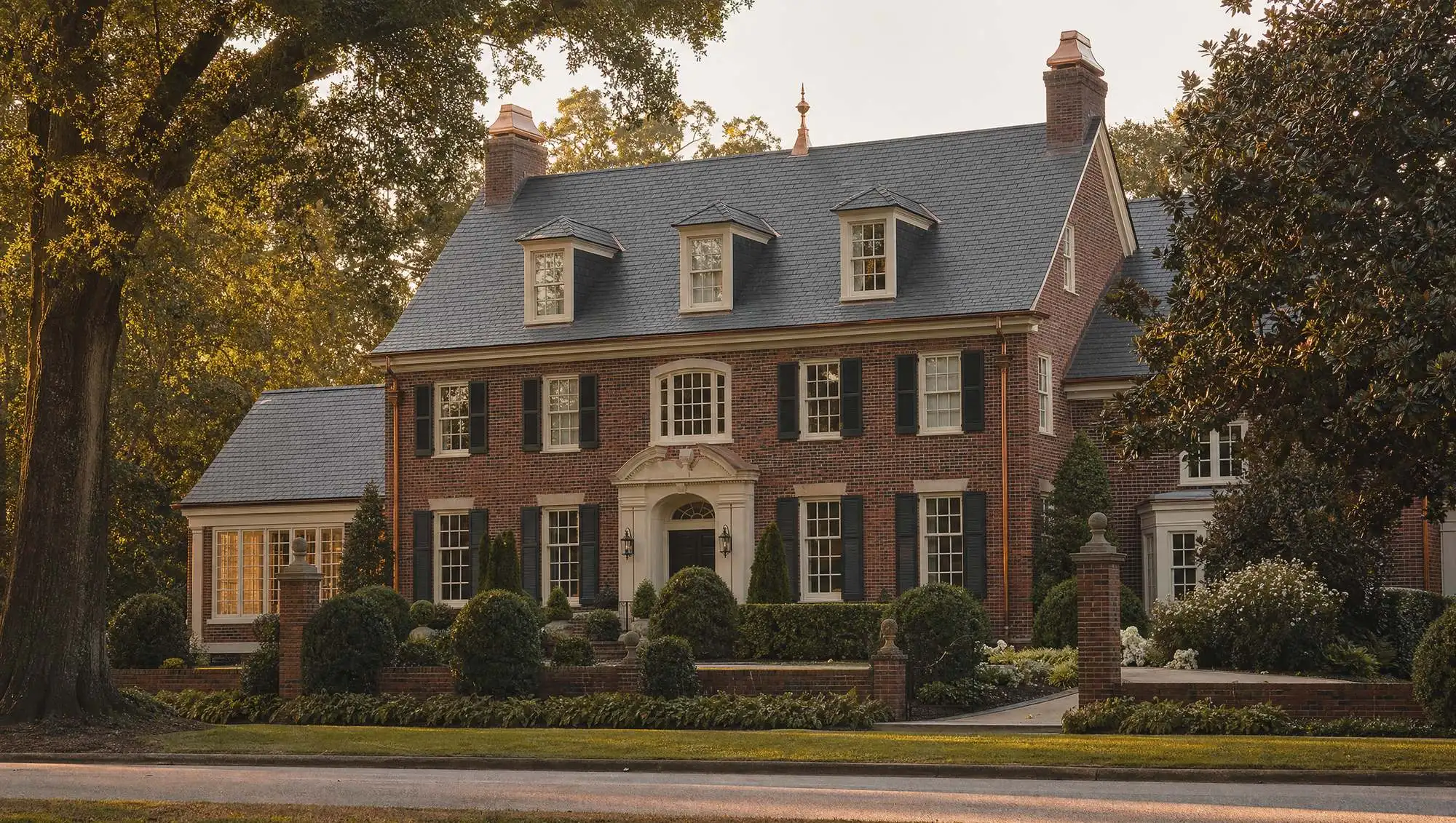
Studio showpiece · Charlotte roofing
Ridgeline Roofing Co.
Slate craft, weather evidence, restoration scope, and owner-led trust.
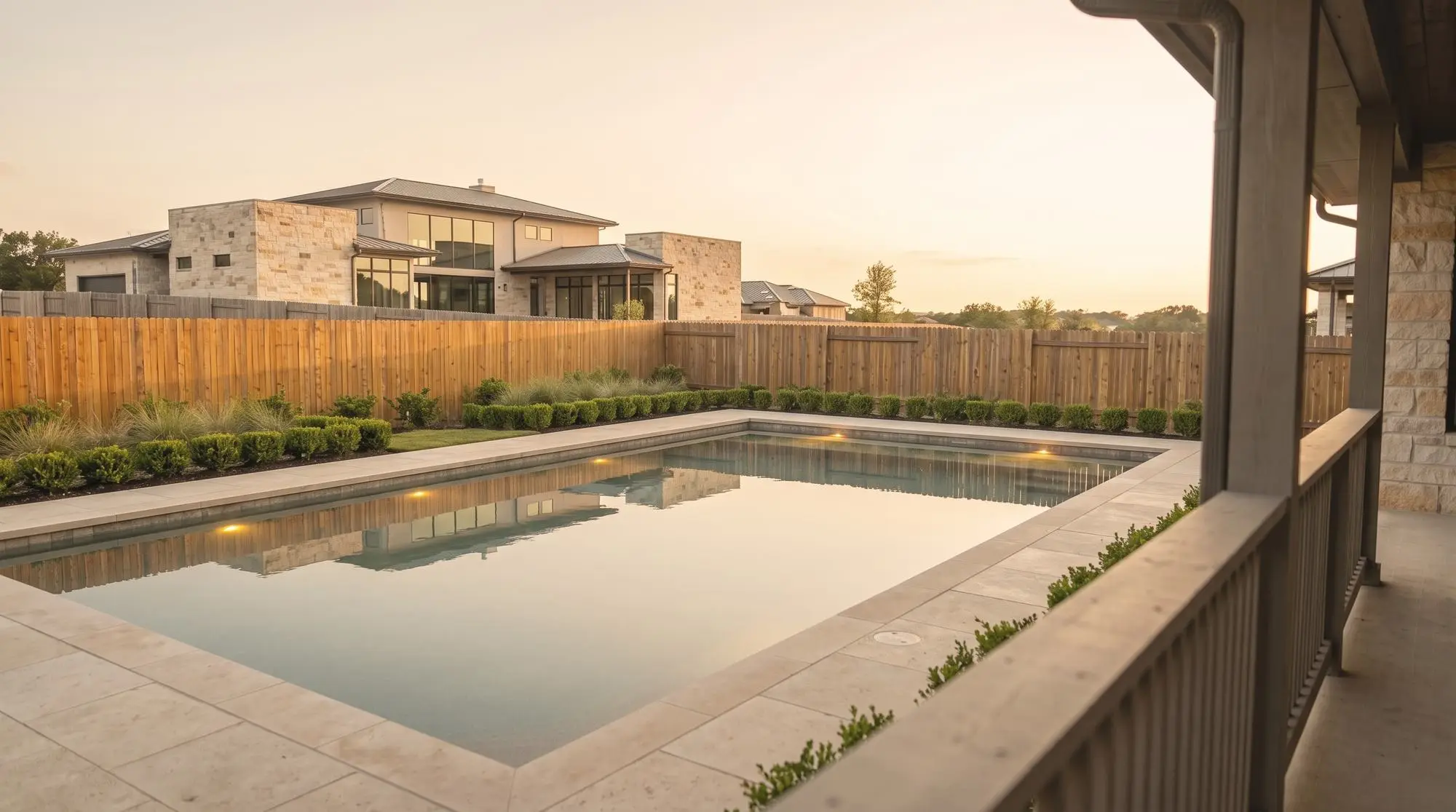
Studio showpiece · Austin pool builder
Stillwater Pools & Outdoor
Water, material detail, local positioning, and a qualified project path.
Before the inquiry
A contractor site should answer the job before it asks for the lead
- What the company builds
- Where the company works
- Which projects are a strong fit
- How the process begins
- Who is responsible
- What the customer should prepare
- What happens after the inquiry
- Who owns the finished website
Field questions
Questions worth answering before the build
What should a contractor website include?
A contractor website should identify the work, service area, project fit, process, and person responsible. It should show finished projects in coherent groups, publish specific reviews and credentials, explain what happens before and during a job, and provide an inquiry path that collects location, project type, budget, timeline, and photos. Those elements help a referred homeowner decide whether the contractor is credible and appropriate before making contact.
How much should a contractor website cost?
Cost depends on what is being delivered, not only on the platform. A DIY subscription buys software and leaves strategy, copy, design, image treatment, launch, and upkeep with the owner. A freelancer or studio adds execution, while a custom agency adds broader research and process. Coxswain's published offer is $1,995 for a fixed-scope showpiece homepage. The contractor website cost guide breaks down the other categories and hidden line items.
Is Squarespace or WordPress better for a contractor?
Squarespace is often the cleaner owner-managed choice when the site is modest and the priority is dependable design with limited upkeep. WordPress is stronger when the business needs a large content system and has someone responsible for updates, security, and plugins. Neither platform fixes weak positioning or project presentation. The right choice follows the operating model, content volume, ownership requirements, and who will maintain the site after launch.
How many project photos should a contractor website show?
There is no useful universal number. A stronger rule is to show enough images to explain several representative jobs from context to detail. For each selected project, include a wide establishing view, material or craft details, and any view that clarifies scope. Ten disciplined images across three coherent projects can be more persuasive than fifty mixed photos. Remove duplicates, unfinished scenes without explanation, and images that make the work difficult to read on a phone.
Should a contractor list prices on the website?
Publish pricing when it helps a qualified buyer understand the level of engagement and when the range can be stated honestly. Fixed packages and minimum project sizes are particularly useful. Avoid false precision for work that depends heavily on site conditions, engineering, selections, and scope. In those cases, explain the cost drivers and collect a realistic budget band in the inquiry. The goal is useful self-selection, not a number that creates the wrong promise.
Does a contractor need a page for every service area?
No. Create a service-area page only when the market has genuine demand, relevant proof, and analysis that cannot be copied onto another city page. A clear main market and operating radius are usually better than dozens of near-identical town pages. Separate pages become useful when search evidence, local project material, terminology, and buyer decisions differ enough to justify them. Duplicated locality pages weaken trust and can create doorway-page risk.
How quickly can a contractor website be built?
Coxswain's fixed-scope homepage is built in a seven-day window once the current site, project photos, launch access, and feedback windows are ready. Larger sites take longer because they require more pages, proof, and review. Speed is realistic only when scope and decision points are fixed. A rushed build without usable photography or access is not a seven-day process; those inputs are prerequisites, not tasks to discover at the end.
Who owns the website after launch?
The contractor should know who owns the domain, code, content, design files, analytics property, and hosting account before work begins. Coxswain's published offer states that the finished site is yours outright. Third-party software and hosting remain subject to their own terms, but the handover should make access and responsibilities explicit. Avoid arrangements where leaving an agency means losing the domain, the content, or a usable export of the site.
Put the work in front of the right customer.
One call, one direction approval, one punch-list pass. $1,995 fixed and live in seven days once the inputs are ready.
Book a call